
How to Clear Renovation Debris That Has Been Piling Up in Your Backyard (GTA)
Clear old renovation debris from a GTA backyard. Compare hauling, on-site crushing and reuse options for concrete, brick and rubble.
Read article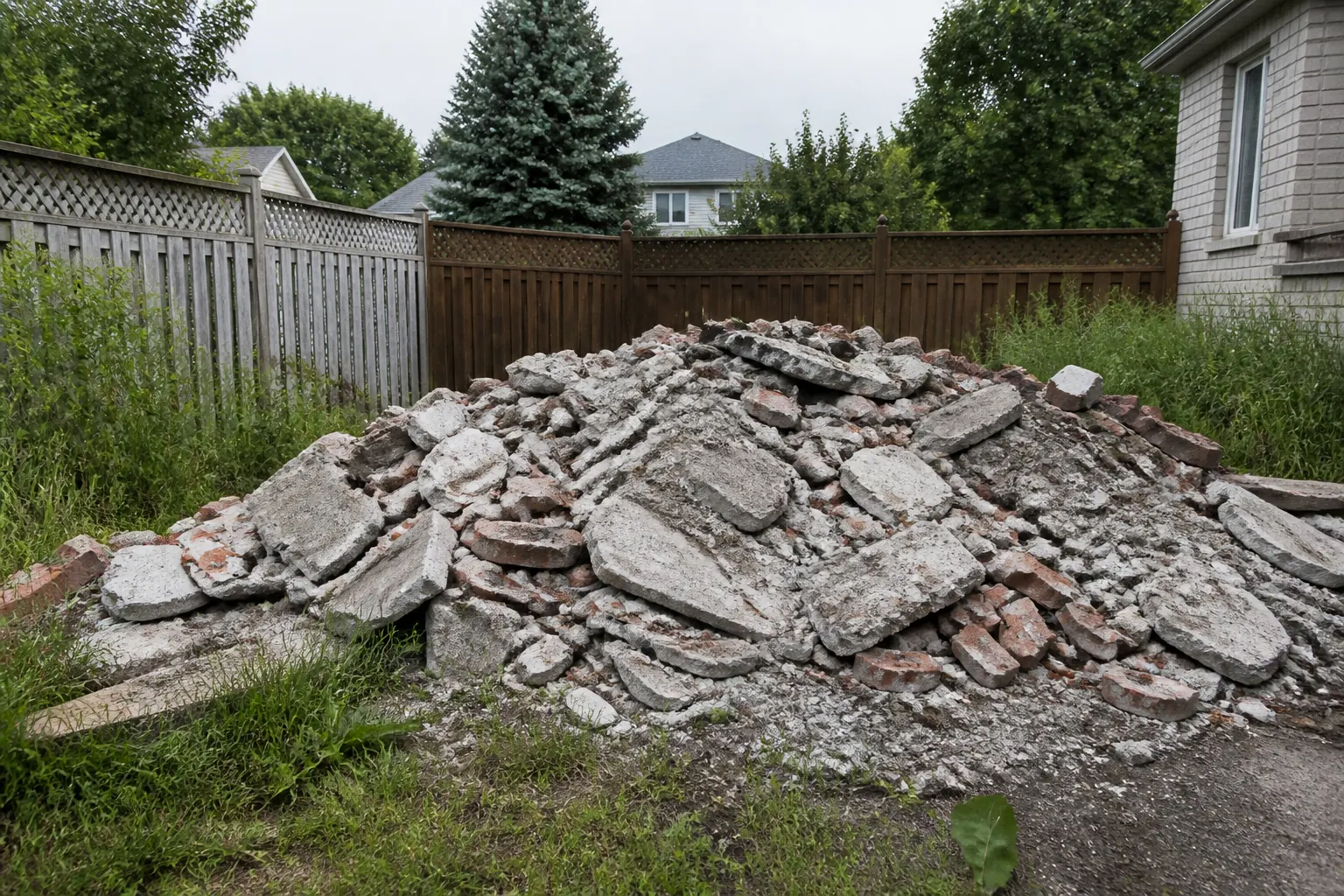
Learn how to clear old construction rubble in Ontario. Compare hauling, on-site crushing and reuse options for concrete, brick and demolition debris.
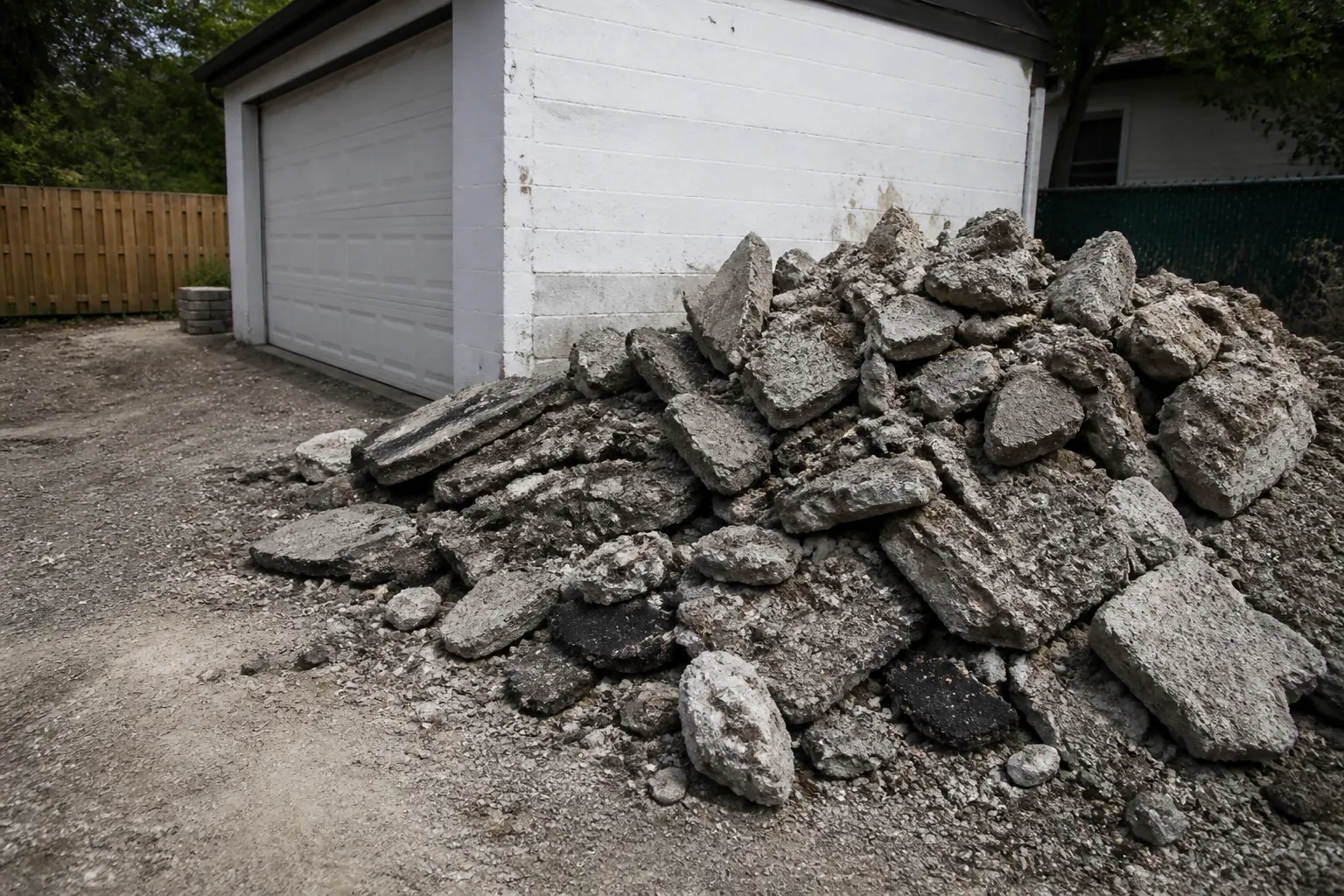
An old rubble pile usually starts with good intentions: a renovation finishes, a contractor leaves clean fill behind, or a demolition phase ends before the next trade arrives. Then life gets in the way — weather, budget, permits or simply not knowing the disposal options. Months turn into seasons, and the pile becomes part of the landscape.
Across Ontario and the GTA, we regularly see homeowners with concrete chunks, broken brick, old footing material and mixed demolition debris that has sat beside a garage, along a fence line or in a side yard for one or more years. The good news: long-standing rubble is often still processable if it is mostly clean hard material.
A pile that has been sitting for a long time can create more issues than people expect:
If you are planning to sell, refinance landscaping or finally build that patio or driveway, clearing the pile moves from “someday” to a real project step.
Most Ontario properties with aged hard-material piles have four practical paths:
Best when volume is small, material is contaminated or you need everything off site immediately. Expect loading labour, multiple truck trips on GTA roads and per-tonne disposal fees. See our comparison of on-site crushing vs hauling for when trucking costs dominate.
If the pile is mostly clean concrete, brick, stone or compatible asphalt, mobile crushing can process material where it sits and produce sub-base for a new driveway, interlock bed, grading layer or future hardscape project. This is often the strongest option when the pile is large and you have a reuse plan on the same property.
Long-standing piles sometimes collect soil, wood, metal and garden waste mixed in over time. Sorting once — even roughly — clarifies whether crushing, hauling or a combination makes sense. Our FAQ covers photo submissions so we can flag obvious contamination before mobilization.
If you are already planning driveway removal or a full backyard regrade, bundle rubble clearance into the same schedule. One mobilization often costs less than two separate cleanup attempts years apart.
In most cases, yes — age alone does not disqualify hard demolition material. What matters more:
| Condition | Usually OK to crush? | Notes |
|---|---|---|
| Old concrete chunks | Yes | Rebar is typically fine; see concrete crushing |
| Brick and block | Yes | Bricks crushing handles many masonry types |
| Clean stone / rubble | Yes | Stone crushing for compatible material |
| Old asphalt pieces | Often yes | Separate from soil-contaminated loads |
| Mixed with soil, roots, trash | Sort first | Contamination increases hauling need |
| Painted/treated unknown waste | Case-by-case | Photos help before quoting |
Weathering can actually make oversized pieces easier to break before feeding a crusher. The main limit is composition, not how many winters the pile survived.
Cost drivers are almost always the same whether the pile is new or years old:
Use the calculator for a preliminary range, then request a quote with photos showing pile size, access route and nearby structures. Mention how long the material has been sitting if weeds or mixed debris are visible — it helps us plan sorting time.
Contractors managing multiple overdue cleanups should review contractor support and pricing for half-day and full-day blocks.
Old construction rubble does not have to stay on your Ontario property indefinitely. Hauling works for small or contaminated loads; on-site crushing often wins when you have volume, clean hard material and a reuse plan. The pile’s age is rarely the barrier — access, composition and project goals decide the best path.
Next step: Send photos of your rubble pile, run the calculator, or contact us to discuss crushing vs hauling for your site.
Questions about your project? Contact info@stonecrushers.ca or call +1 (437) 886-1505.
Clear old renovation debris from a GTA backyard. Compare hauling, on-site crushing and reuse options for concrete, brick and rubble.
Read article
Compare old concrete driveway removal options in Ontario, including hauling, on-site crushing and reusing rubble as base material.
Read article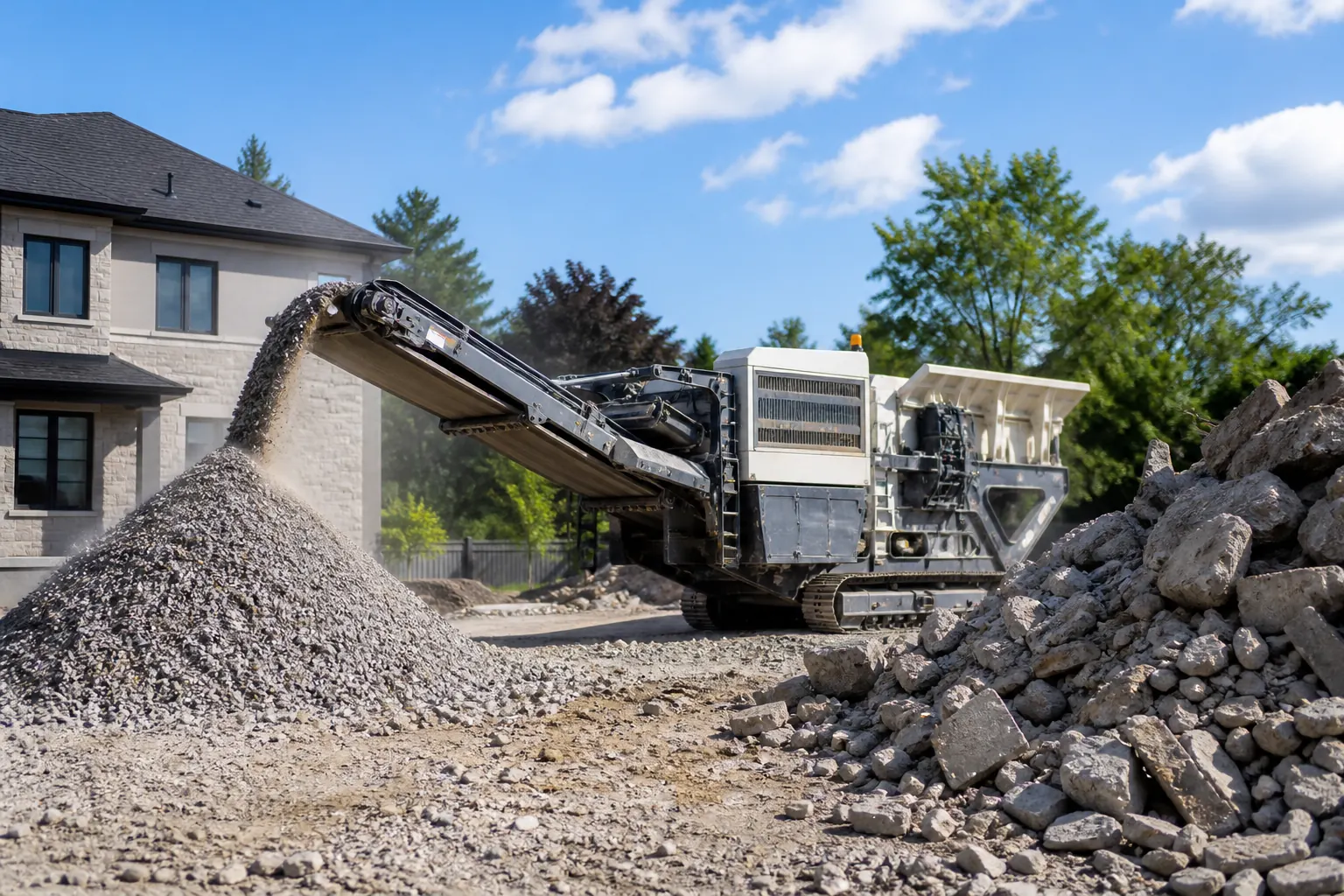
Clear demolition waste from a delayed Ontario renovation. Compare hauling, on-site crushing and reuse options for concrete, brick and stone.
Read articleSend photos of your material and we will prepare an estimate for your Ontario or GTA project.