
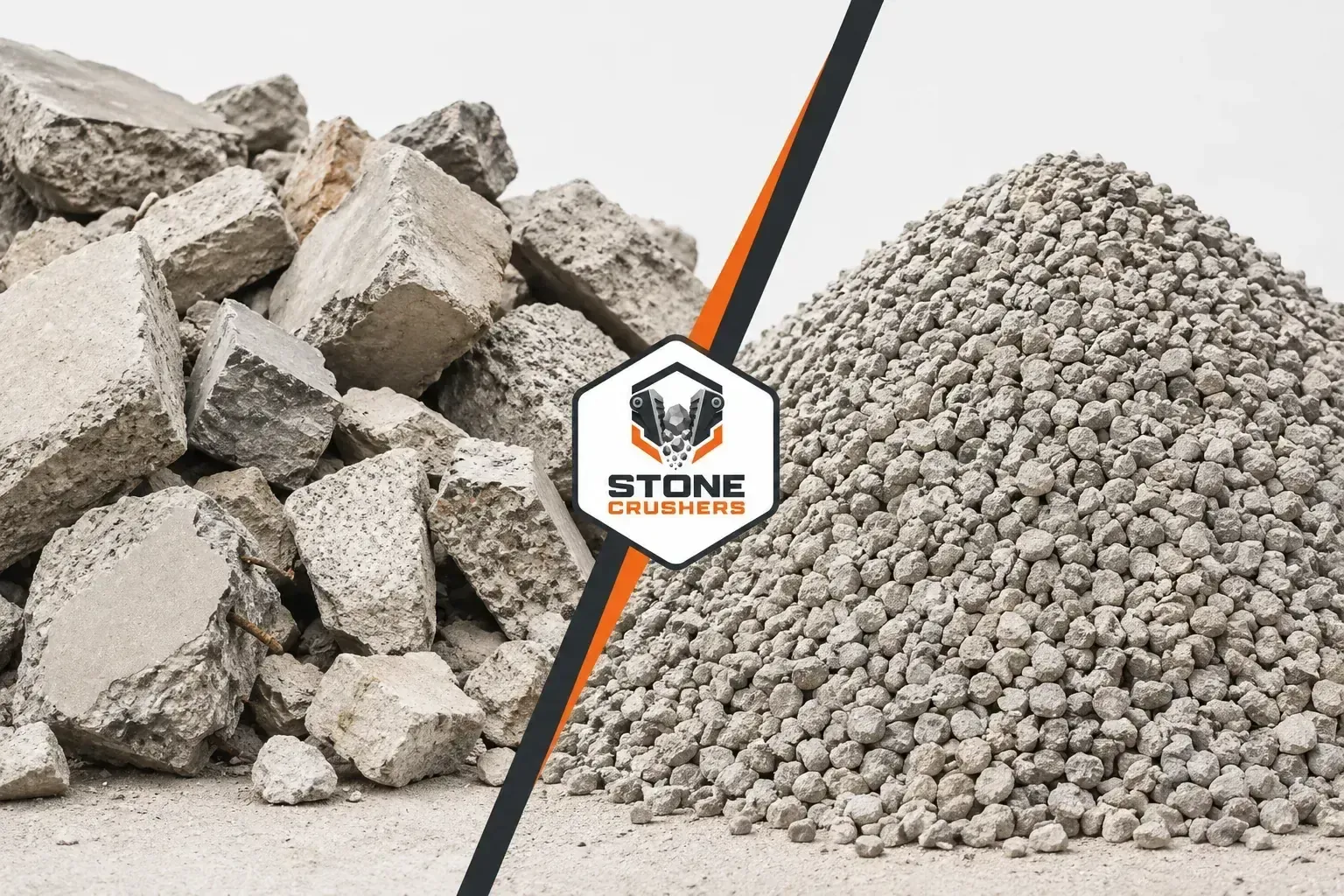
On-Site Crushing vs Hauling and Disposal in Ontario
Compare on-site crushing with hauling concrete rubble in Ontario, including costs, disposal, trucking and reuse as base material.
Read article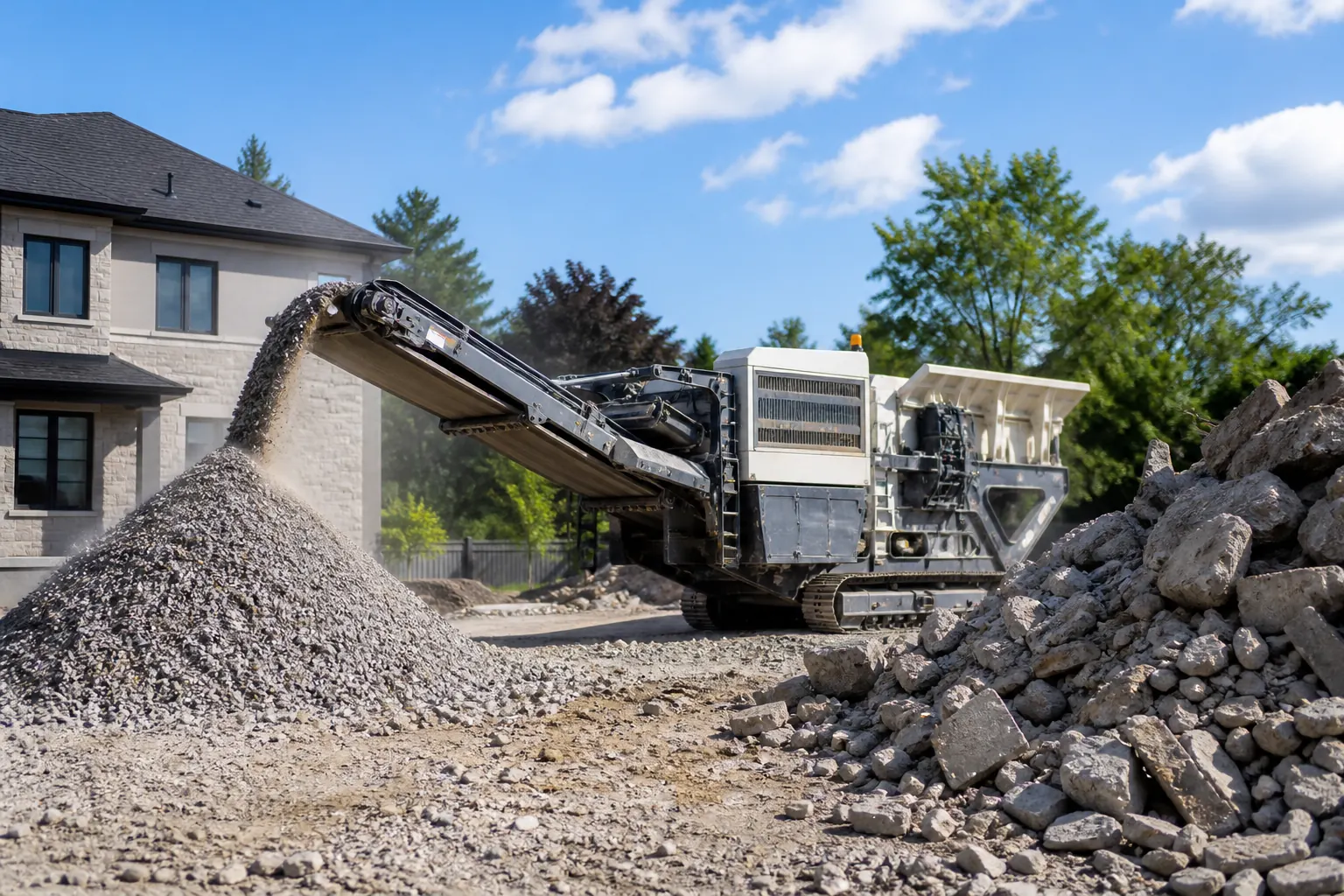
Clear demolition waste from a delayed Ontario renovation. Compare hauling, on-site crushing and reuse options for concrete, brick and stone.
Renovations stall for predictable reasons: budget reprioritized, permit delays, contractor availability, weather or a design change mid-project. When work stops, demolition waste is often already generated — concrete slabs broken, old asphalt stripped, interior masonry removed. Without an immediate disposal plan, that material stays on site while the project waits.
Ontario homeowners and small contractors both inherit this problem. The waste is not just unsightly; it blocks the next phase, complicates insurance walkthroughs and makes restarting the job more expensive because cleanup becomes a separate mobilization.
Typical material left behind after a paused renovation or partial demo:
Hard, clean material from structural demo is usually the best candidate for on-site crushing. Soft interior waste generally belongs in separate hauling streams — do not assume one crusher visit handles an entire mixed house gut.
Clear the site completely, then import new base when construction resumes. Simple mentally, but you pay for loading, trucking, disposal and later delivery of new aggregate. On delayed GTA projects, that double handling is where budgets balloon.
Process concrete, brick and stone into sub-base you will need anyway for the restarted scope — new driveway, garage pad, interlock bed or site grading. Aligns well with concrete, brick and stone crushing services depending on mix.
Demo waste from Phase 1 gets crushed before Phase 2 framing or hardscape. Useful for contractors juggling multiple stops; see contractor support and our landscaping contractor guide.
Working around a pile consumes space, slows crews and often damages material you could have reused. Delayed projects that restart without cleanup frequently pay twice — once to move the pile later, again to import fill.
| Scenario | Crushing on site | Hauling off site |
|---|---|---|
| Large volume, clean concrete/brick | Strong fit — reuse on restarted project | High trucking + disposal |
| Small pile, no reuse plan | May not justify mobilization | Often simpler |
| Mixed with soil/trash | Sort first; crush clean fraction | Full export may be faster |
| Tight timeline to restart | Same-day processing possible | Bin queueing in busy seasons |
| Contractor margin focus | Reduces purchased fill | Easier to quote generically |
For a deeper framework, read on-site crushing vs hauling in Ontario.
If you are bidding a restart, treat legacy waste as a line item, not an assumption:
Homeowners comparing contractor bids should ask whether cleanup includes export, crushing or neither — vague “disposal included” lines cause disputes when piles are larger than expected.
Age alone rarely changes processing rules for inert hard material. Watch for:
When in doubt, send photos through our quote form or review common questions in the FAQ. We serve much of Ontario from Vaughan — confirm coverage on the service area map.
For many delayed renovations with large hard-material piles:
Contractors running multiple delayed cleanups across the GTA can batch planning using the same photo workflow for each property.
Delayed renovations leave demolition waste behind, but the material does not have to block your project indefinitely. Haul-off is straightforward for small or contaminated loads; on-site crushing turns long-standing concrete and masonry into usable base and often reduces total restart cost for Ontario and GTA sites with volume and a reuse plan.
Restarting a stalled project? Request a quote with current pile photos, review pricing, or contact us to schedule cleanup before the next construction phase.
Questions about your project? Contact info@stonecrushers.ca or call +1 (437) 886-1505.
Compare on-site crushing with hauling concrete rubble in Ontario, including costs, disposal, trucking and reuse as base material.
Read article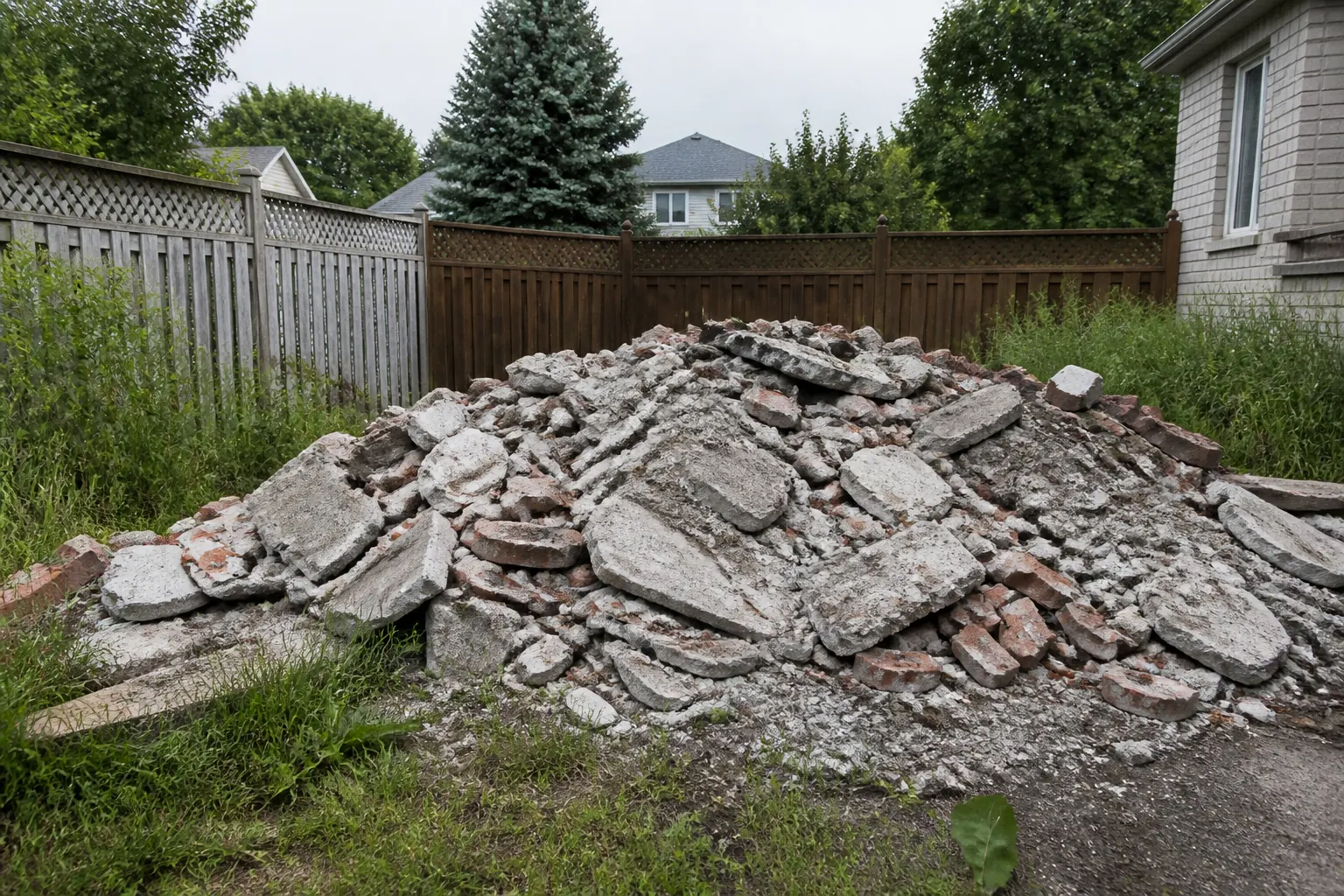
Learn how to clear old construction rubble in Ontario. Compare hauling, on-site crushing and reuse options for concrete, brick and demolition debris.
Read article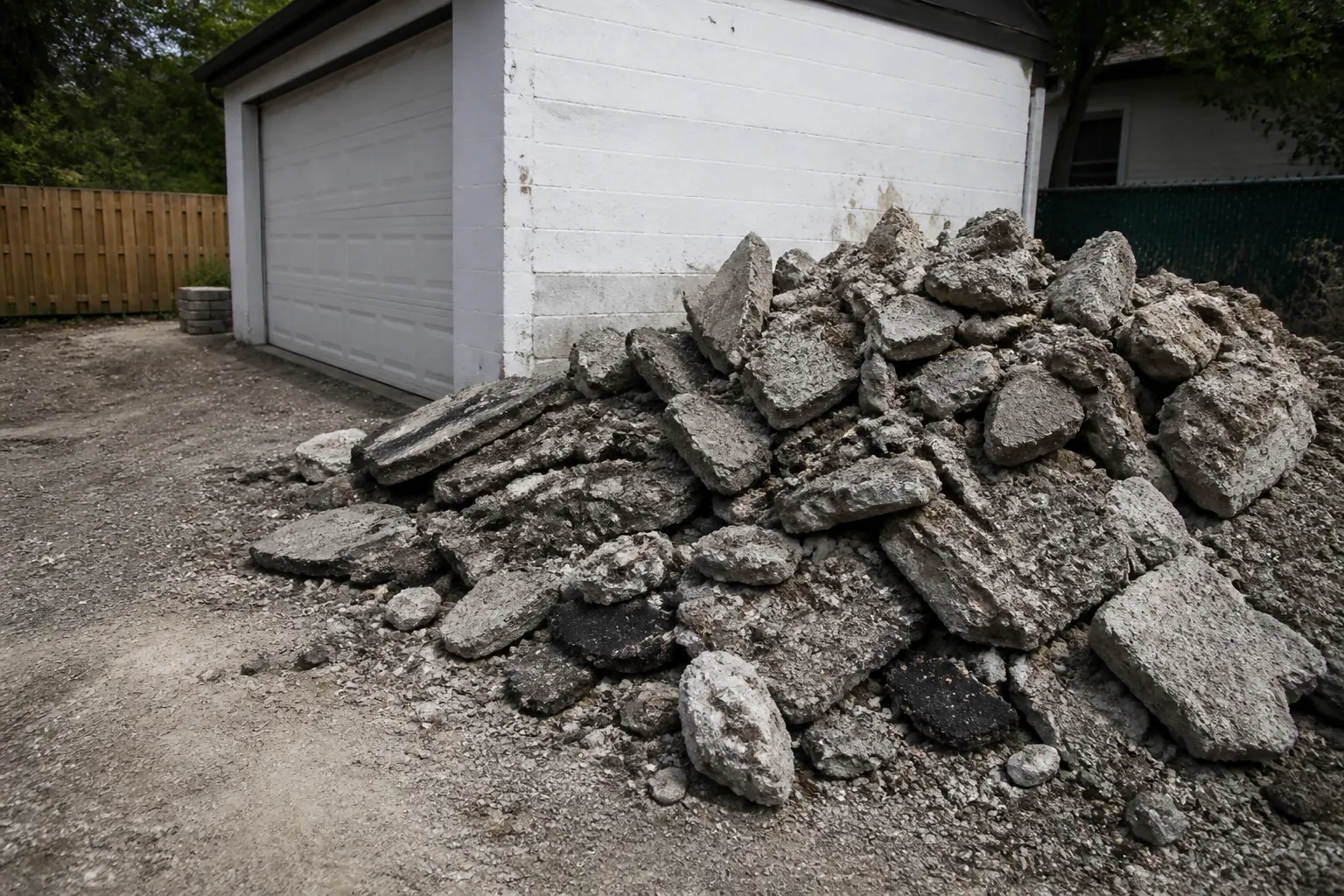
Clear old renovation debris from a GTA backyard. Compare hauling, on-site crushing and reuse options for concrete, brick and rubble.
Read articleSend photos of your material and we will prepare an estimate for your Ontario or GTA project.