
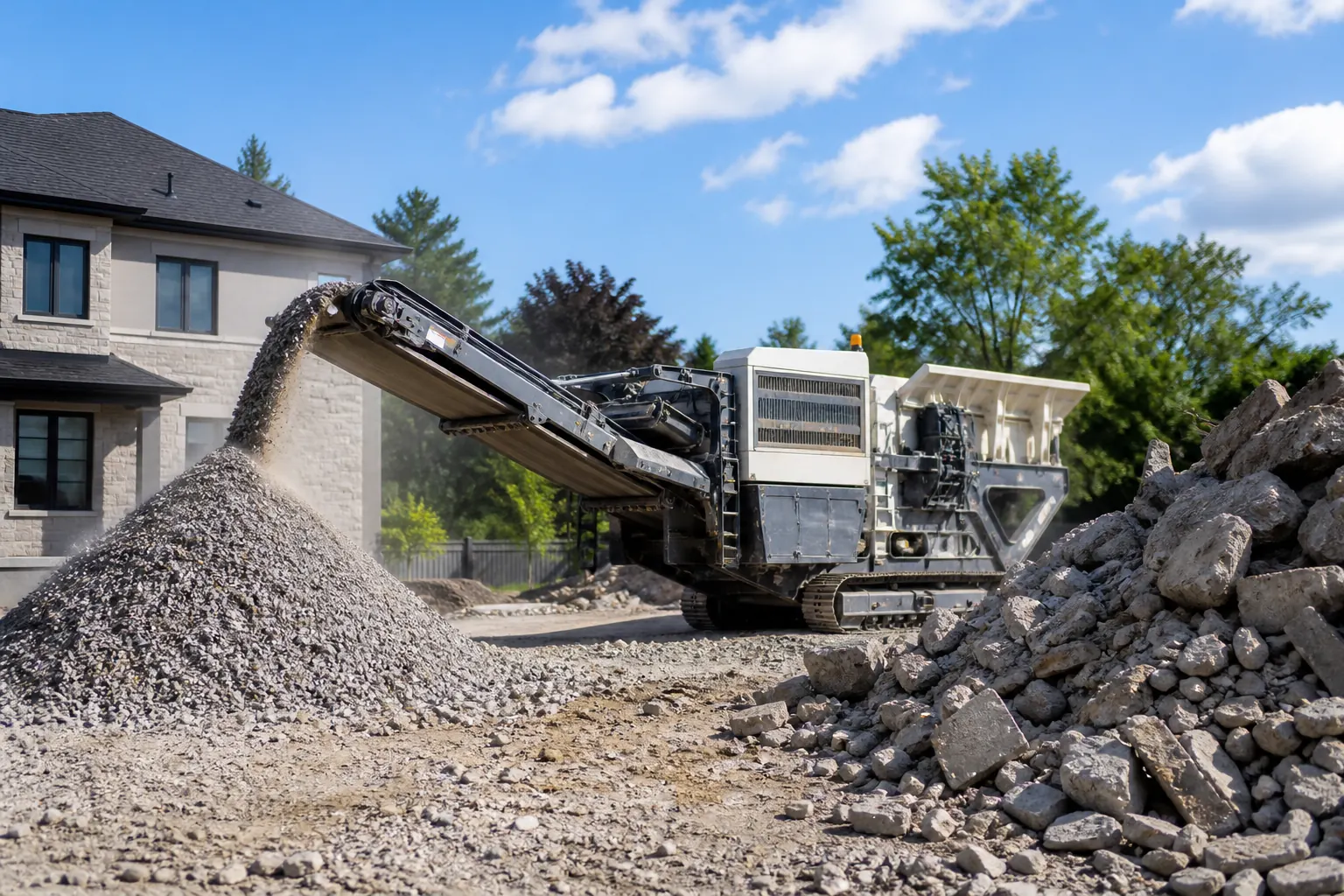
How to Dispose of Demolition Waste From a Delayed Renovation in Ontario
Clear demolition waste from a delayed Ontario renovation. Compare hauling, on-site crushing and reuse options for concrete, brick and stone.
Read article
How landscaping and interlock contractors in the GTA use on-site crushing to cut disposal costs, speed up sites and reuse concrete rubble as base material.
On-site crushing is most useful when a landscaping or interlock job produces enough clean concrete, asphalt, brick or stone to justify mobilization — and the same project needs aggregate for base. Instead of treating removal and base delivery as two unrelated costs, the crew processes one material into the other.
From our Vaughan service area, the first details we need are practical: pile size, material type, gate or driveway width, overhead clearance, and where the finished aggregate will be staged. Those details tell us more than the property address alone.
A typical interlock or patio project often looks like this:
With crushing, steps 2 and 3 can become one operation. The rubble stays on the property and returns to the crew as aggregate. Our contractor support service is designed around that handoff between demolition and base preparation.
The staging order matters. If fresh excavation blocks the crusher location, or finished aggregate has nowhere to go, the machine saves less time. We recommend choosing the setup and stockpile zones before the breakout crew starts.
Materials we commonly assess from contractor photos include:
Mixed loads with soil, roots, wood or household waste need sorting first. A wide photo of the full pile plus a close-up of the material is usually more useful than a single close shot. Send both through our quote form; the FAQ explains the quoting process.
Disposal-heavy jobs hide costs in:
Compare the complete workflows, not only the crusher rate. A haul-away estimate should include loading time, bin or truck capacity, disposal charges, travel delays and delivery of replacement base. A crushing estimate should include mobilization, feeding the machine and spreading or stockpiling the output.
Our pricing shows the available service blocks. Use the calculator for an initial range, then confirm the plan with photos before putting the number into a customer proposal.
Homeowners care about noise, duration, dust and driveway access. Set expectations early:
Pointing customers to our blog and projects pages can also build confidence that recycling on site is standard practice, not a shortcut.
Contractor sites frequently include:
The common planning mistake is measuring the gate but not the full route. Turns, eaves, parked vehicles, soft ground and the stockpile location can matter just as much as the narrowest opening. Break oversized concrete before arrival and keep the setup zone clear. See on-site crushing for full-service options with operator support.
We serve much of the GTA from Vaughan — view the service area map for coverage details.
Crushing is not automatic on every job. Hauling may win when:
Adding a simple “crush or haul” checkpoint to your estimating process prevents a disposal assumption from becoming an unexpected cost after demolition starts.
For GTA landscaping and interlock crews, crushing works best when reuse is planned before demolition. Confirm the material, access route, setup zone and output location first; then compare the complete crushing and hauling workflows.
Trade partners: review contractor support, pricing, and contact us to set up recurring project quotes across your service area.
Questions about your project? Contact info@stonecrushers.ca or call +1 (437) 886-1505.
Clear demolition waste from a delayed Ontario renovation. Compare hauling, on-site crushing and reuse options for concrete, brick and stone.
Read article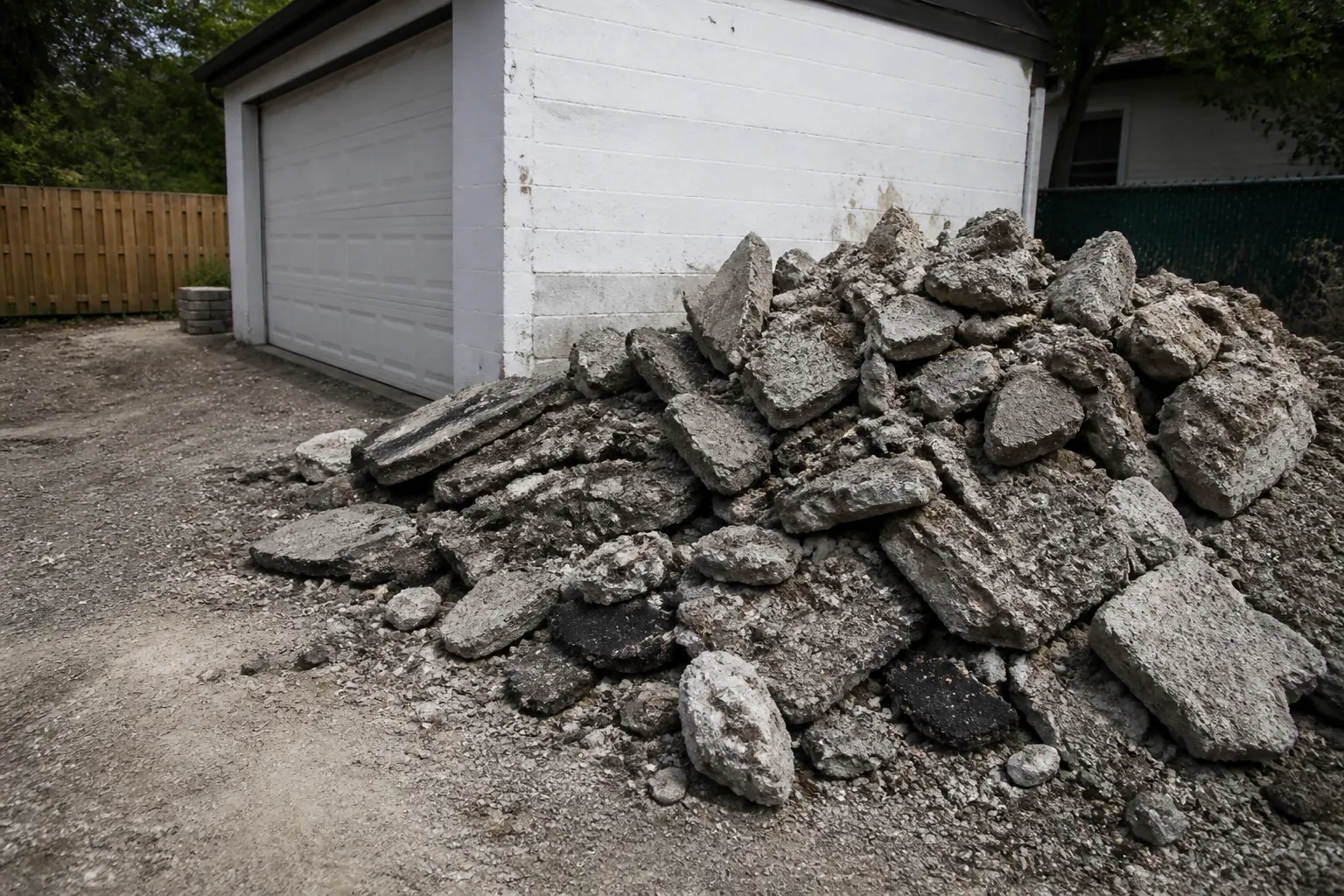
Clear old renovation debris from a GTA backyard. Compare hauling, on-site crushing and reuse options for concrete, brick and rubble.
Read article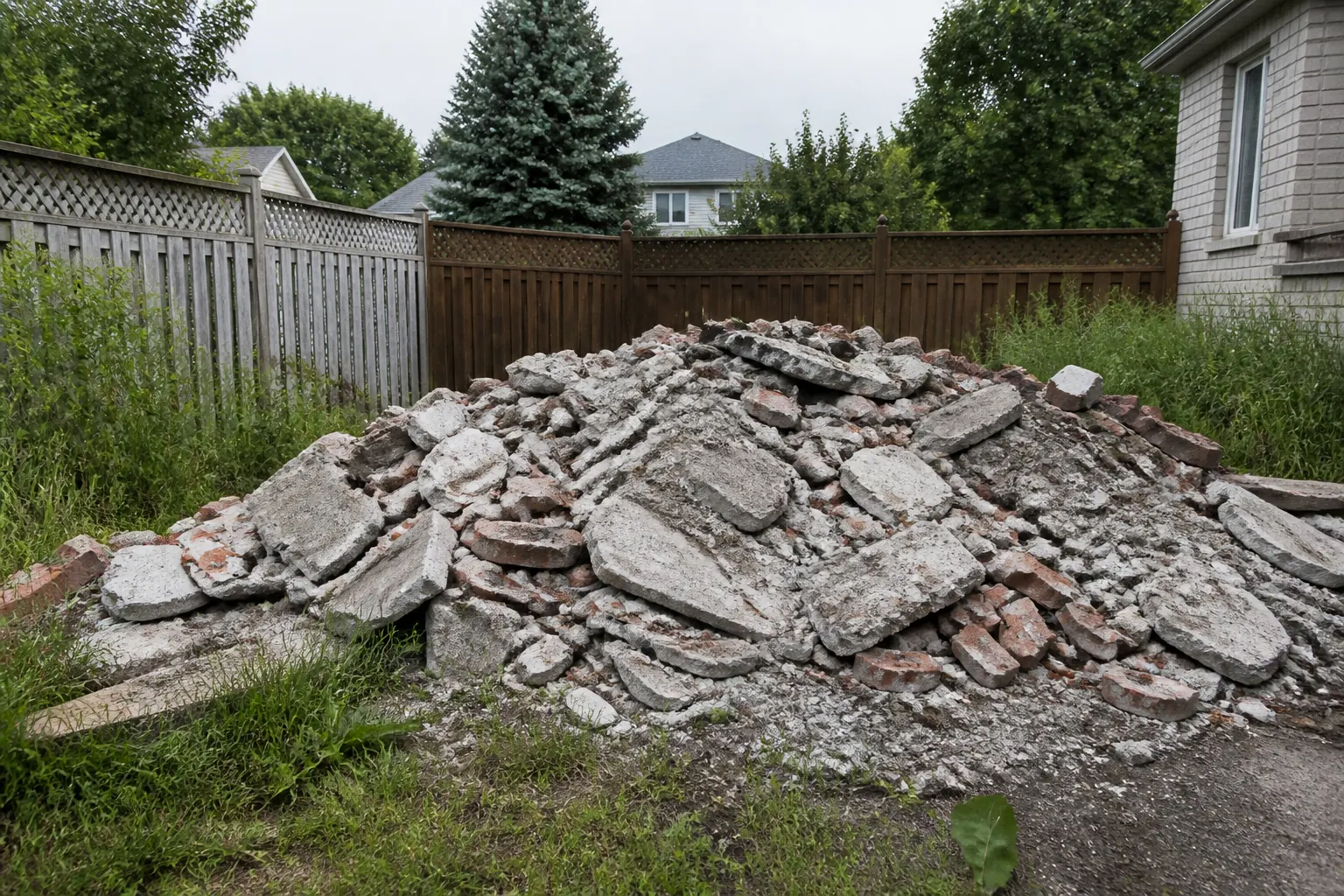
Learn how to clear old construction rubble in Ontario. Compare hauling, on-site crushing and reuse options for concrete, brick and demolition debris.
Read articleSend photos of your material and we will prepare an estimate for your Ontario or GTA project.